
Vet Nurse vs Vet Tech: Differences, Duties, Certification & Career Path

Short Answer - Vet Nurses and Vet Technicians are sometimes used interchangeably, but their roles differ in practice. A Veterinary nurse focuses heavily on hands-on, practical clinical skills in general practice, while a Veterinary technician mainly focuses on technical skills and requires a 4-year Bachelor's Degree. This path incorporates more advanced laboratory diagnostics, research, and theoretical science. |
If you’re passionate about animal healthcare, chances are you’ve searched terms like vet nurse vs vet tech, how to become a veterinary tech, or what a vet nurse does. And honestly, the terminology can feel confusing at first.
Some clinics use “veterinary nurse” and “veterinary technician” as the same job description, which is inaccurate.
Then there’s the veterinary assistant role, which adds another layer of confusion for aspiring professionals entering the field. Whether you’re exploring your first veterinary career or looking to advance professionally, this guide breaks down everything you need to know about the difference between vet nurse and vet tech, including certification pathways, salary potential, and long-term opportunities.
Want to build a long-term career in veterinary medicine instead of just landing an entry-level job?
Investing in continuing education and real-world clinical skills can dramatically improve your career opportunities. Platforms like Vet Team Training provide practical continuing education created specifically for veterinary professionals.
A Quick Overview of Key Differences Between Vet Nurse vs Vet Tech
The debate around vet nurse vs vet tech is usually more about licensing systems and terminology. It is the daily job functions and how they assist in overall veterinary work. Here’s a simplified, quick comparison to help you understand the difference
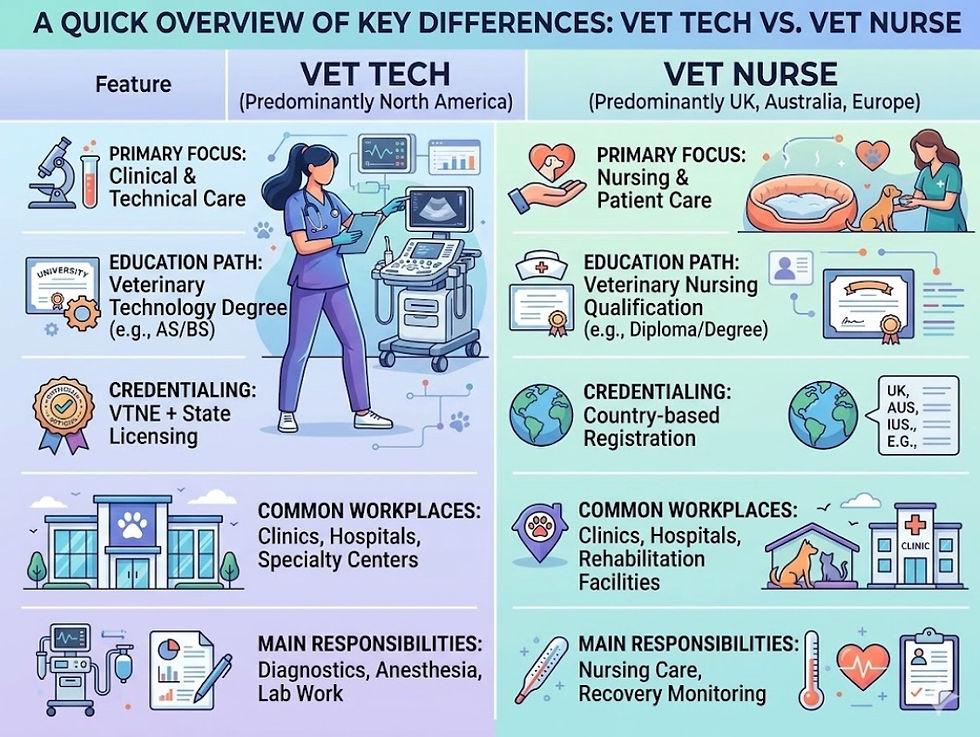
Another important difference is regional terminology. In countries like the United Kingdom and Australia, a veterinary nurse is the official professional title. In the United States, the profession is more commonly called “veterinary technician.” In real-world practice, both careers involve direct patient care, medical support, and assisting veterinarians during procedures.
What Is a Vet Tech? Job Role and Career Path
A veterinary technician (vet tech) is a trained medical professional who assists veterinarians with clinical procedures, diagnostics, anesthesia monitoring, and mainly laboratory work. In many ways, vet techs function similarly to registered nurses in human healthcare.
What does a vet tech do?
Here are some of the most common daily responsibilities of a vet technician:
Assisting during surgeries
Monitoring anesthesia
Taking radiographs (X-rays)
Running diagnostic lab tests
Collecting blood and urine samples
Administering medications
Educating pet owners
Monitoring hospitalized patients
Maintaining medical records
Veterinary medicine continues to evolve rapidly, many professionals pursue continuing education throughout their careers. Resources like VTT Education Programs help veterinary technicians strengthen both medical and leadership skills through RACE-approved CE courses.
How to Become a Veterinary Tech?
If your goal is to become credentialed, understanding registered veterinary technician requirements is essential. Requirements vary slightly by location, but most U.S. states follow a similar process.
1. Complete an Accredited Program: Most students earn an associate degree in veterinary technology from an AVMA-accredited institution.
2. Gain Practical Experience: Hands-on clinical training is required during most vet tech programs.
3. Pass the VTNE: Graduates typically take the Veterinary Technician National Examination (VTNE).
4. Apply for State Credentialing
Depending on your state, you may become:
RVT (Registered Veterinary Technician)
LVT (Licensed Veterinary Technician)
CVT (Certified Veterinary Technician)
5. Continue Learning: Successful vet techs continually improve their clinical and leadership skills. Professional development platforms like VTT offer ongoing learning opportunities, including emergency medicine, leadership training, and specialty education for veterinary professionals.
What Is a Vet Nurse?
A veterinary nurse performs nearly identical duties to a vet tech in many countries. However, they work directly in general practice clinics, assisting veterinarians. Their duties include animal restraint, taking blood, preparing patients for surgery, monitoring anesthesia, and providing nursing care.
What Does a Vet Nurse Do?
If you’re wondering what does a vet nurse do, their responsibilities commonly include:
Patient nursing care
Surgical preparation and recovery monitoring
Administering medications and fluids
Assisting during treatments
Monitoring hospitalized animals
Supporting pet owners through treatment plans
Managing post-operative care
The title veterinary nurse better reflects the hands-on patient care involved in the profession.
Vet Tech vs Veterinary Assistant: Another Important Comparison
Another major comparison prospective veterinarians need to understand is the difference between vet tech vs veterinary assistant. Although the roles may overlap in busy clinics, they differ significantly in training and responsibilities.
Category | Veterinary Assistant | Veterinary Technician |
Formal Education Required | Usually not required | Typically required |
Licensing Needed | No | Yes in many states |
Clinical Procedures | Limited | Advanced clinical duties |
Anesthesia Monitoring | Rarely | Yes |
Lab Testing | Basic support only | Performs diagnostics |
Surgery Assistance | Limited support | Active surgical assistance |
Career Growth | Entry-level | Advanced specialization opportunities |
Interestingly, community discussions online often warn prospective students to carefully research veterinary assistant programs before enrolling. Many professionals recommend prioritizing accredited vet tech programs if your long-term goal is medical advancement. (Reddit)
How to Become a Veterinary Nurse
The process for how to become a veterinary nurse depends heavily on the country where you plan to work. The process is usually the same as Vet Tech - earn your diploma or GED, complete an accredited degree, gain practical experience, pass the VTNE, and get licensed. In the US, veterinary nurses usually complete:
Approved veterinary nursing diploma programs
University-based nursing education
Clinical placements through approved practices
Many veterinary professionals now combine clinical expertise with leadership and communication training to improve career growth opportunities.
Why Continuing Education Matters in Veterinary Medicine?
The veterinary field changes rapidly. New medications, anesthesia protocols, diagnostic procedures, and patient care standards continue evolving every year. That’s why continuing education is no longer optional for ambitious veterinary professionals. Modern veterinary CE should focus on:
Practical real-world skills
Leadership development
Medical advancements
Team communication
Emergency medicine
Career sustainability
Ready to grow your veterinary career? Explore Vet Team Training’s continuing education platform to access affordable RACE-approved CE courses, leadership resources, medical training, and practical learning opportunities created specifically for vet techs and veterinary nurses. |
Conclusion
Understanding the difference between vet nurse and vet tech becomes much easier once you realize that the roles share many responsibilities, with terminology varying mainly by region and in-depth job role.
Whether you pursue a veterinary nursing pathway or become a registered veterinary technician, both careers offer meaningful opportunities to work closely with animals, support veterinary teams, and build long-term careers in healthcare. Most importantly, your success in veterinary medicine depends heavily on ongoing education, practical experience, and professional growth.


