
Whatnot Clone App: From Business Idea to Successful Launch
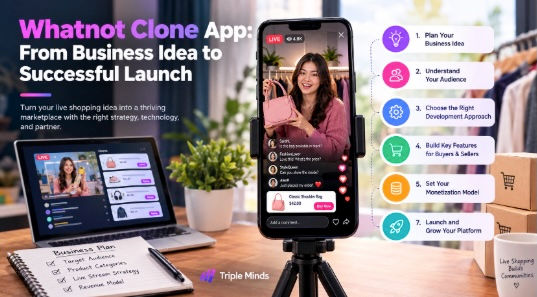
Live shopping has transformed the way people discover and purchase products online. Instead of relying only on product listings and static images, businesses can use live video to demonstrate products, answer questions, interact with viewers, and encourage purchases in real time.
The success of platforms such as Whatnot has made live commerce an attractive business opportunity for entrepreneurs and established brands. However, launching a live-shopping marketplace requires careful planning, from defining the business model to selecting the right technology and building an audience.
A Whatnot Clone can provide the foundation for creating a similar live-commerce experience while allowing businesses to establish their own branding, product categories, seller policies, and monetization strategy. Here is what entrepreneurs should consider when turning the idea into a successful platform.
1. Start With a Clear Business Idea
Before investing in development of a Whatnot Clone, define exactly what the platform will offer. Live commerce can work across numerous product categories, including fashion, electronics, collectibles, beauty products, home accessories, sports merchandise, and more.
Rather than trying to serve every possible category at launch, businesses should identify a specific market opportunity. A focused niche can make it easier to attract the right sellers and buyers.
Consider questions such as:
Who are the target buyers?
Which products will be sold?
Who will host the live streams?
Will sellers manage their own stores?
What geographic market will the platform serve?
How will the business generate revenue?
A clear business model provides direction for the Whatnot Clone development process as well as future marketing and growth strategies.
2. Understand the Live Shopping Experience
A live-shopping platform needs to make the interaction between sellers and buyers simple and engaging.
Sellers should be able to schedule or start live sessions, showcase products, communicate with viewers, and manage orders. Buyers, meanwhile, should be able to discover live streams, interact with hosts, ask questions, and purchase products without unnecessary steps.
A typical live-shopping experience may include:
Live video streaming
Product demonstrations
Real-time chat
Product listings during streams
Shopping carts
Instant checkout
Seller profiles
Ratings and reviews
Follow and notification features
Order tracking
The goal is to combine entertainment and commerce into one seamless experience.
3. Choose Between Custom and White-Label Development
One of the most important decisions is how the platform will be developed.
Custom development provides complete control over the user interface, backend architecture, features, integrations, and future scalability. It is suitable for businesses that have highly specific requirements and want to build a completely unique product.
A White Label Live Shopping Platform provides another option. Instead of developing every component from the ground up, businesses can start with an existing technology foundation and customize it according to their brand and business model.
This approach can help reduce development time and allow entrepreneurs to concentrate on areas such as seller acquisition, product selection, content creation, and marketing.
When evaluating a white-label provider, businesses should consider customization capabilities, scalability, security, payment integrations, source-code arrangements, technical support, and future maintenance.
4. Include Features for Sellers and Buyers
A successful marketplace needs to serve both sides of the platform.
Seller Features
Sellers should have tools for creating profiles, listing products, scheduling live events, managing inventory, communicating with customers, processing orders, and reviewing sales performance.
An intuitive seller dashboard can make it easier for businesses and individual creators to manage their operations.
Buyer Features
Buyers need an equally convenient experience. They should be able to browse upcoming and active streams, search for products, follow sellers, interact during broadcasts, purchase products, and track their orders.
Personalized recommendations can further improve product discovery by showing users streams and products related to their interests.
5. Plan the Monetization Model
A live-shopping marketplace can generate revenue through multiple channels.
One common model is charging sellers a commission on completed transactions. The platform can also introduce seller subscription plans that provide additional tools or promotional benefits.
Other possibilities include:
Featured product placements
Sponsored live streams
Seller listing fees
Premium seller accounts
Advertising
Transaction fees
The right combination depends on the target market and platform positioning. The pricing structure should remain competitive enough to attract sellers while generating sufficient revenue to support the business.
6. Build Reliable Streaming and Commerce Infrastructure
Live commerce depends heavily on technical performance. A platform that experiences buffering, delayed interactions, failed payments, or checkout problems can quickly lose user trust.
A scalable Whatnot Clone may require mobile applications, backend APIs, cloud infrastructure, live-streaming technology, databases, payment gateways, notification systems, analytics, and administrative tools.
Video delivery should be optimized for different network conditions and device types. Payment processing should also be secure and reliable.
The platform should be designed with scalability in mind so that infrastructure can handle increases in viewers, sellers, products, and simultaneous live events.
7. Create a Seller Acquisition Strategy
A marketplace cannot succeed without sellers who provide interesting products and engaging live sessions.
Before launch, businesses should identify potential sellers and creators who can attract an audience. These could include independent retailers, influencers, collectors, manufacturers, or specialized product experts.
Early sellers may be offered promotional incentives such as reduced commissions, onboarding assistance, featured placements, or marketing support.
Building a strong seller community before a major public launch can help ensure that buyers have enough content to explore from the beginning.
8. Focus on Trust and Security
Trust is essential when money and products are exchanged through a marketplace.
The platform should provide secure payment processing, seller verification, appropriate moderation tools, clear return policies, and mechanisms for handling disputes.
Reviews and ratings can also help buyers make more informed purchasing decisions. Businesses should establish marketplace policies covering prohibited products, seller behavior, refunds, cancellations, and customer complaints.
These measures can create a safer environment for both buyers and sellers.
9. Launch With a Focused MVP
Trying to include every possible feature in the first release can increase development complexity and delay the launch.
Instead, businesses can begin with a minimum viable product containing the most important functionality. This might include user registration, seller profiles, product listings, live streaming, chat, shopping carts, payments, orders, and an admin panel.
After launch, analytics and customer feedback can help identify which features should be improved or added.
This approach allows businesses to validate their concept with real users before making larger investments.
10. Work With the Right Technology Partner
Choosing a development partner can have a major impact on the project's timeline and scalability.
Businesses should evaluate a provider's experience with marketplace applications, live streaming, payment systems, mobile development, and cloud infrastructure. They should also clarify ownership, customization, post-launch support, maintenance, and upgrade policies.
Companies such as Triple Minds can be considered by businesses exploring ready-made or customized solutions for launching a live-commerce platform. The important objective is to select a technology partner whose capabilities match the project's current requirements and future growth plans.
Final Thoughts
Launching a live-commerce business involves much more than developing an application. Entrepreneurs need a clear niche, reliable technology, strong seller relationships, an effective monetization model, and a strategy for attracting buyers.
A Whatnot Clone can provide the technological foundation for building a branded live-shopping marketplace, while a White Label Live Shopping Platform can offer businesses a faster route to market.
However, technology should support the business strategy rather than replace it. By starting with a focused market, prioritizing the buyer and seller experience, building reliable infrastructure, and continuously improving the platform based on user feedback, businesses can create a live-shopping marketplace with stronger potential for sustainable growth.


