
When the Open Road Turns Dangerous: What Houston's Drivers Should Know
- Jun 30
- 4 min read
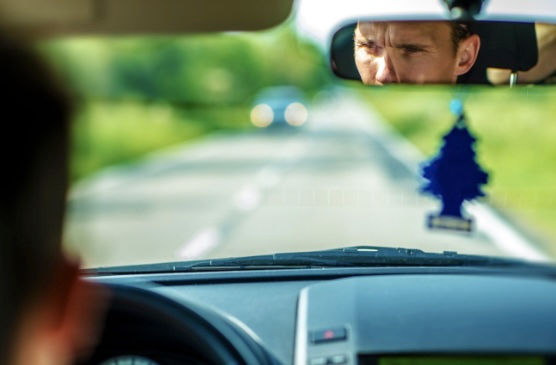
There's a particular kind of confidence that comes with driving a well-engineered vehicle on an open Texas highway. The sound dampening, the precision handling, the sense of control that comes from sitting behind a wheel built by people who understood exactly what they were doing. It's part of why so many of Elevated's readers gravitate toward driving as both a passion and a lifestyle, whether that means a weekend run through the Hill Country in something German and understated, or the daily commute into downtown Houston in a vehicle that makes even gridlock feel composed.
That confidence has limits, and they are not the ones most drivers imagine.
Houston's highway network, anchored by Interstate 10, Interstate 45, and the Sam Houston Tollway, carries some of the densest commercial freight traffic in the country alongside its share of luxury and performance vehicles.
The Port of Houston alone moves a staggering volume of cargo through the region each year, and nearly all of it eventually travels by truck. The two worlds, leisure driving and industrial freight, coexist most days without incident. When they don't, the physics involved leave little room for the engineering that makes a premium vehicle feel so capable in the first place.
The Mismatch Most Drivers Never Consider
A fully loaded commercial truck can weigh upward of 80,000 pounds. Even the most sophisticated luxury sedan or SUV, with its advanced crumple zones, adaptive cruise control, and active safety systems, is operating at a fraction of that mass. Stopping distance, not horsepower, becomes the determining factor in a serious collision, and an 18-wheeler traveling at highway speed needs hundreds of feet more than a passenger vehicle to come to a complete stop.
This disparity is not abstract. It shows up in crash data across Harris County year after year, and it does not discriminate by the make or price point of the vehicle on the other end of the collision. A driver in a vehicle equipped with the latest collision avoidance technology is still subject to the same laws of mass and momentum as everyone else on the road. Engineering can reduce risk. It cannot eliminate it.
None of this is a reason to avoid Houston's highways, and it certainly isn't a reason to drive with less confidence. It is, however, a compelling reason to understand what happens legally and financially when something goes wrong, because the conversation that follows a serious crash is rarely as straightforward as people assume, and it tends to catch even financially sophisticated drivers off guard.
What Car Accident Compensation Actually Covers
Many drivers, even those with significant resources and excellent insurance coverage of their own, underestimate the scope of car accident compensation available to them under Texas law. It extends well beyond the obvious cost of vehicle repair or replacement. Medical treatment, both immediate and long-term, lost income, diminished earning capacity, and pain and suffering can all factor into a properly valued claim.
For a high-net-worth individual whose time carries substantial economic value, or whose business depends on their physical presence, judgment, and ability to travel, the lost earning capacity component of a claim alone can dwarf the cost of the vehicle involved. A serious spinal injury or a traumatic brain injury does not simply interrupt a person's life for a few weeks of recovery. It can permanently alter what that person is capable of doing professionally, and Texas law allows for that full economic picture to be accounted for when a claim is properly built.
Insurance carriers, including those representing large commercial fleets with deep financial reserves, do not volunteer this full picture. Their financial interest lies in resolving claims quickly and for as little as possible, and that interest does not change simply because the claimant arrived at the scene in a six-figure vehicle. If anything, insurers sometimes assume that a driver with visible financial means will be less inclined to pursue the full value of a claim, either out of a desire to avoid the inconvenience of litigation or a misplaced sense that their own resources make legal representation unnecessary.
That assumption is almost always wrong, and acting on it tends to be expensive. A claim that is settled quickly and informally, without a full medical and financial evaluation, is a claim that leaves money on the table permanently. Once a settlement is signed, it cannot be revisited if symptoms worsen or if the true scope of an injury only becomes clear months later.
A Firm Built for the Cases That Matter Most
Hank Stout holds the distinction of Texas Bar Foundation Fellow, a recognition reserved for attorneys who have demonstrated sustained commitment to legal excellence within the profession. As a principal at Sutliff & Stout, he represents clients across Harris County in commercial vehicle and serious injury litigation, the kind of cases where the financial stakes and the legal complexity both run high, and where the opposing side is rarely a single individual but rather a well-resourced carrier with its own legal team working from the first hour after a crash.
That asymmetry is precisely why representation matters most in exactly the cases readers of this publication are most likely to encounter, serious collisions involving commercial vehicles on highways designed for speed and volume rather than caution.
For Houston's most discerning drivers, the lesson is not to drive less assertively or to trade confidence for caution every time a truck appears in the rearview mirror. It is to understand, well before it is ever needed, what real recourse looks like when the open road stops cooperating, and to know that the right representation can mean the difference between a claim that reflects the true cost of what was lost and one that simply closes the file.


