
Why 4K Streaming Has Become the New Standard for Netherlands Viewers — And What It Actually Requires
- 1 day ago
- 5 min read
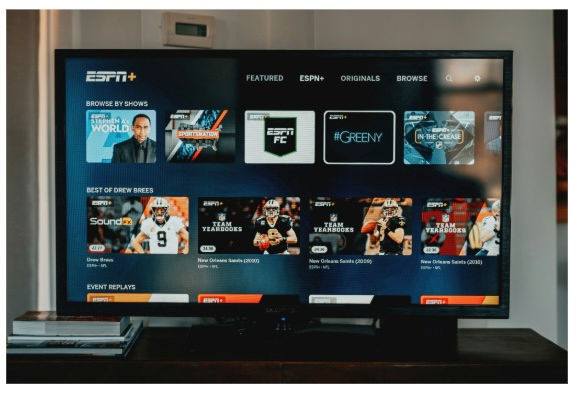
Few countries in Europe are better connected than the Netherlands. Fiber-to-the-home penetration is among the highest on the continent, average speeds outpace the European average by a significant margin, and Dutch households have consistently been among the earliest adopters of connected home technology.
Against that backdrop, the shift toward 4K streaming hasn't been a gradual transition so much as an accelerating one — driven by falling 4K TV prices, growing 4K content libraries, and streaming services in the Netherlands that have made ultra-high-definition content accessible to a much broader viewer base than could access it just a few years ago.
Understanding what 4K streaming actually requires — in equipment, internet speed, and content availability — is the starting point for anyone who wants to make the most of the Netherlands' exceptional connectivity infrastructure.
What 4K Actually Means — And Why It Matters
4K resolution, sometimes called Ultra HD or UHD, refers to a picture resolution of approximately 3,840 by 2,160 pixels, which is four times the pixel count of standard Full HD (1080p). The practical consequence of that pixel density is a picture that is noticeably sharper, more detailed, and more visually immersive than HD — particularly on larger screens where the difference between resolution levels is most visible.
For most viewers, the jump from standard definition to HD was immediately and dramatically apparent. The jump from HD to 4K is more subtle on smaller screens but becomes increasingly significant as screen size grows. On a 55-inch or larger TV — which now accounts for the majority of new TV purchases in the Netherlands — the difference between HD and 4K content is clearly visible, particularly in high-motion content such as live sport, nature documentaries, and action films.
The addition of HDR — High Dynamic Range — to most modern 4K content adds another dimension to the quality improvement. HDR widens the range of colors and brightness levels a screen can display, producing images that are both more vibrant and more nuanced than non-HDR equivalents.
Most 4K content available through modern streaming services includes HDR, and most 4K TVs sold in the Netherlands in the past two to three years support it. The combination of 4K resolution and HDR represents the current practical peak of consumer streaming quality — the point at which additional technical improvements produce diminishing returns in the viewing experience for most people in most viewing environments.
The Internet Speed Question
The Netherlands' internet infrastructure makes it one of the most 4K-ready markets in Europe, but it's still worth being clear about the actual speed requirements for 4K streaming, because the numbers are higher than many viewers assume.
Streaming in 4K needs more bandwidth than most people expect. The baseline figure most services recommend is 25 Mbps per stream — enough to maintain consistent quality under normal conditions. Drop below that, and buffering becomes likely, particularly when the network is handling other traffic at the same time.
The headline speed of a broadband plan and the speed available to a single 4K stream are two different things when the whole household is active. Two people watching 4K, someone on a video call, someone gaming — that's 50 Mbps or more in 4K alone, before anything else is counted. A connection that can handle all of that without any stream being throttled needs to be sized accordingly.
For Netherlands households on fiber connections — which the majority of urban Dutch households now are — meeting these requirements is rarely a problem. Fiber-to-the-home connections commonly deliver 500 Mbps to 1 Gbps of symmetric bandwidth, which comfortably accommodates multiple simultaneous 4K streams alongside everything else happening on the home network.
The bottleneck for 4K streaming in the Netherlands is rarely the connection itself — it's more likely the quality and server infrastructure of the streaming service, which determine whether 4K content is delivered smoothly regardless of the viewer's available bandwidth.
The Equipment Side
A 4K streaming setup requires three elements to work: a 4K display, a playback device capable of 4K output, and a streaming service that actually delivers 4K content.
The 4K display requirement is increasingly straightforward to meet. The majority of new televisions sold in the Netherlands at 40 inches and above are now 4K capable, and prices have fallen to the point where 4K is the default rather than the premium option for most new TV purchases. Older HD televisions will still display content from 4K streaming services — but will downscale it to the screen's native resolution, losing the quality benefit entirely.
The playback device is where some households find a gap in their setup. Options range from a 4K smart TV with built-in streaming apps — the simplest arrangement — to external devices for TVs without smart capabilities or for viewers who prefer a dedicated streaming device. These include:
4K streaming sticks
Set-top boxes
IPTV boxes that connect directly to the TV and run independently of its software
Device compatibility is also relevant for viewers who want to stream on multiple screens. Most modern streaming services support 4K playback on compatible smartphones and tablets as well as televisions — though the visual benefit of 4K is considerably more apparent on a large TV screen than on a handheld device, where the pixel density advantage over HD is harder to perceive.
What Content Is Actually Available in 4K
The supply side of 4K streaming has expanded considerably over the past three years, and the Netherlands market has benefited from that expansion alongside the rest of Europe.
Major international streaming platforms have made 4K a standard offering for their premium content — original productions from these services are typically shot and delivered in 4K, and back-catalogues are being progressively upgraded where the source material supports it. The caveat is that 4K access on many of these platforms is restricted to higher-tier subscription plans, so viewers on basic or standard plans may find the content they're watching delivered in HD rather than 4K, even when their setup is capable of more.
Live sports in 4K is an area where the Netherlands market has seen significant development. Major sports events — football, Formula 1, and other premium sporting content — are increasingly broadcast in 4K, and the platforms that carry these rights in the Netherlands have been expanding their 4K coverage to match this trend.
For viewers who primarily subscribe to streaming services for live sport, the availability of 4K sports coverage is one of the most significant quality improvements of recent years — the combination of 4K resolution, HDR, and high frame rates produces live sport coverage that is noticeably more immersive than HD equivalents.
The VOD library — the range of films and series available on demand in 4K — has grown substantially across platforms operating in the Netherlands, giving viewers a much larger pool of 4K content to draw from than existed even two or three years ago.
Getting the Most From 4K Streaming in the Netherlands
The Netherlands' combination of exceptional internet infrastructure, high 4K TV penetration, and a growing range of streaming services delivering 4K content puts Dutch viewers in an unusually strong position to take full advantage of what ultra-high-definition streaming offers.
Getting the setup right comes down to four things:
A television that is 4K and HDR capable
A playback device that supports 4K output
A home connection that can sustain at least 25 Mbps per simultaneous stream
A streaming service that genuinely delivers 4K to the devices being used, not one that advertises 4K while restricting it to premium plans or specific hardware
The Netherlands' infrastructure makes all of this achievable. The limiting factor is almost always one of these four elements being overlooked rather than unavailable.
For viewers who have upgraded their TV setup and want to make sure their streaming setup matches it, the technology infrastructure in the Netherlands makes this one of the most achievable markets in Europe to get this right.


