
Why Are More Industries Investing In Automation For Long-Term Growth?
- Jun 29
- 4 min read
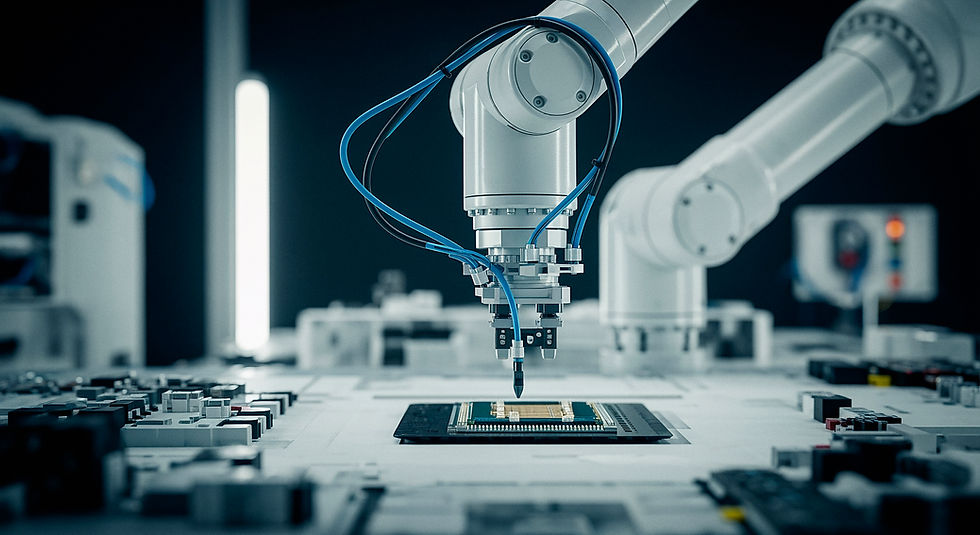
Industrial companies are under constant pressure to increase production while reducing costs. They also need to have high-quality standards. But this is becoming harder due to labor shortages, increasing operating costs, unforeseen equipment breakdowns, and rising customer expectations.
As competition continues to grow, traditional processes often struggle to keep pace with changing market demands. This has resulted in numerous manufacturers and manufacturing plants seeking more intelligent methods of enhancing efficiency without compromising accuracy or productivity.
Additionally, companies need to be ready to expand in the future. They also need the flexibility to adapt to new technologies and changing industry requirements. Unfortunately, outdated systems can slow operations, create inefficiencies, and increase long-term costs.
Here, automation comes into play. With its ability to simplify workflows, enhance consistency, and deliver useful operational insights, automation assists companies in performing better. As a result, companies are able to establish a more robust base for long-term prosperity.
This article will discuss four major reasons why more industries are investing in automation as a means to achieve sustainable growth and enhance overall performance.
1. Increases Productivity and Operational Efficiency
Increased productivity is one of the largest reasons why industries invest in automation.
Many manual tasks require significant effort and consume valuable time. As production demands increase, these tasks can create bottlenecks and slow down operations. This in turn leads to a decrease in overall efficiency.
Industrial automation assists in resolving this issue. It can do repetitive jobs at a fast rate, with accuracy and consistency.
For example, automated equipment can operate production processes with minimum interruptions. As a result, the facilities will be able to sustain consistent production during the day. They are even able to serve greater demand more effectively.
Moreover, automation minimizes delays related to manual processing and processing inconsistencies. This means that companies are able to produce more without straining their human resources.
In addition, workers are able to concentrate on less repetitive work and more value-added work. This enhances productivity and resource use.
In the end, increased productivity enables firms to expand and maintain operations that are manageable and efficient.
2. Reduces Operational Costs
Even though automation requires initial investment, it can be a source of significant long-term savings.
There are recurrent costs that may be incurred through manual activities. They can include processes that are labor-intensive, malfunctions in production, raw materials wastage, and unforeseen downtime. Such costs may over time affect profitability in a big way.
Luckily, automation can minimize most of these costs.
Since automated systems are more precise, they reduce errors and waste materials. Subsequently, companies are able to become more efficient and reduce the cost of production.
In addition, automated equipment can operate consistently for longer periods. Therefore, companies can increase output without adding the same level of labor expenses.
Moreover, automated machines are able to work longer hours. This information helps managers understand areas of inefficiency and the efficient allocation of resources.
As a result, businesses are able to control costs better and increase overall performance. In the long run, these savings would generate a high payback.
3. Improves Product Quality and Consistency
Product quality plays a critical role in customer satisfaction and business growth.
However, maintaining consistent quality through manual processes can be challenging. This becomes even more difficult as production volumes increase.
Human error, process variations, and inconsistent handling can lead to defects and rework. In turn, these issues can increase costs and affect customer confidence.
Automation helps eliminate many of these challenges.
Because automated systems follow programmed instructions, they perform tasks with a high level of accuracy. As a result, products are manufactured according to consistent specifications.
Additionally, many automated systems include built-in monitoring and quality-control features. These tools can detect issues early in the production process.
Therefore, corrective actions can be taken before defects become larger problems.
As a result, businesses can improve product reliability and maintain higher quality standards. Furthermore, they can reduce waste, lower rework costs, and strengthen customer trust.
4. Enhances Equipment Performance and Reduces Downtime
Equipment downtime remains one of the most costly challenges in industrial operations.
When critical machinery fails unexpectedly, production schedules can be disrupted. In addition, delivery deadlines may be missed, and operating costs can rise quickly.
Therefore, reducing downtime is a major priority for many industries.
Automation helps improve equipment reliability through real-time monitoring and performance tracking. Sensors and automated diagnostic systems continuously collect data and monitor machine conditions.
As a result, potential issues can be identified before they develop into major failures.
Furthermore, automation supports predictive maintenance strategies. Instead of waiting for equipment to break down, businesses can schedule maintenance based on actual performance data.
This proactive approach offers several advantages. It helps extend equipment life, improve reliability, and reduce costly interruptions.
Consequently, facilities can maintain smoother operations and more consistent production schedules.
In the long run, reliable equipment performance supports higher productivity and stronger business growth.
Conclusion
The growing adoption of automation is about much more than improving efficiency.
Businesses are investing in automation because it helps increase productivity, reduce operating costs, improve product quality, enhance equipment reliability, and support future growth.
At the same time, automation provides the flexibility needed to adapt to changing market conditions. It also helps organizations make better decisions through data-driven insights.
As industries continue to face new challenges, automation offers practical solutions that strengthen both daily operations and long-term performance.
Ultimately, companies that embrace automation are better positioned to remain competitive, improve profitability, and achieve sustainable growth.
For organizations focused on long-term success, automation has become one of the most valuable investments they can make.


