
Why Lightweight Materials Are Shaping the Future of Architecture
- Jul 30
- 3 min read

Written by Brian Wrike, VP of Sales, North America
The conversation around building materials is evolving. Strength, durability and aesthetics remain fundamental considerations but architects and designers are increasingly evaluating another characteristic that has historically received far less attention: weight.
As buildings become more ambitious, construction methods continue to evolve, and scrutiny around sustainability intensifies, material weight is influencing decisions at every stage of a project.
For manufacturers, developing lightweight engineered wood solutions has become an important way to support greater design freedom without compromising performance.
More Freedom, Fewer Constraints
Material selection has always influenced design. Today, however, architects are expected to balance structural performance, construction efficiency, sustainability, cost, and occupant experience, often simultaneously.
Lightweight materials help address many of these competing priorities by reducing the permanent loads a building must support. Lower structural loads can influence everything from framing requirements to foundation design, giving architects and engineers greater flexibility when developing complex spaces.
This flexibility is particularly valuable as projects increasingly incorporate large-format panels, intricate millwork, prefabricated assemblies, and expressive architectural features that demand precision without unnecessary weight.
Building Smarter from Factory to Job Site
The benefits of lightweight materials extend well beyond the completed building. Material weight can affect every stage of the construction.
Lighter products are easier to transport, require less effort to handle, and can simplify installation once they arrive on site. Together, these efficiencies can help reduce labor demands, improve logistics, and contribute to smoother project delivery.
For manufacturers, lightweight engineered wood can also improve fabrication. Consistent panel quality, dimensional stability, and ease of machining can help reduce waste while supporting the precision expected in today's architectural applications.

Supporting the Growth of Modular Construction
As modular and prefabricated construction continues to gain momentum, lightweight materials are becoming increasingly valuable.
Factory-built components must be transported before being assembled on site, and every kilogram affects shipping, lifting requirements, installation and overall project logistics. Materials that combine low weight with strength and dimensional stability can help manufacturers to optimize these processes without sacrificing performance.
Engineered plywood is particularly well suited for these applications because it offers structural stability while avoiding many of the limitations associated with heavier building materials.
Sustainability Beyond the Specification Sheet
Material weight also plays a role in a building's broader environmental performance.
Lighter products help reduce transportation-related fuel consumption, simplifying installation, and support more resource-efficient construction practices.
When those materials are also responsibly sourced and manufactured from renewable resources, they can contribute to sustainability objectives throughout a project's lifecycle.
As the industry works to reduce embodied carbon and improve environmental performance, architects are evaluating not only what materials are made from, but also how efficiently they move through the supply chain and. perform over time.
Designing for Change
Perhaps one of the most important shifts in architecture is the growing expectation that buildings should evolve.
Offices are converted into residential spaces. Retail environments are reconfigured. Hospitality projects are renovated to meet changing guest expectations.
Lightweight materials can make these transitions easier by simplifying renovations, interior reconfigurations, and future fit-outs. The ability to modify spaces with less disruption helps extend the useful life of a building while allowing it to respond more effectively to changing needs.
A Broader Way of Evaluating Materials
The role of building materials is expanding. Architects and designers no longer evaluate products solely on strength or appearance.
Material efficiency, ease of construction, lifecycle performance, adaptability and sustainability have all become part of the specification process.
For manufacturers like Garnica, a global leader in premium sustainable plywood, this evolution reinforces the importance of engineering materials that perform across multiple dimensions.
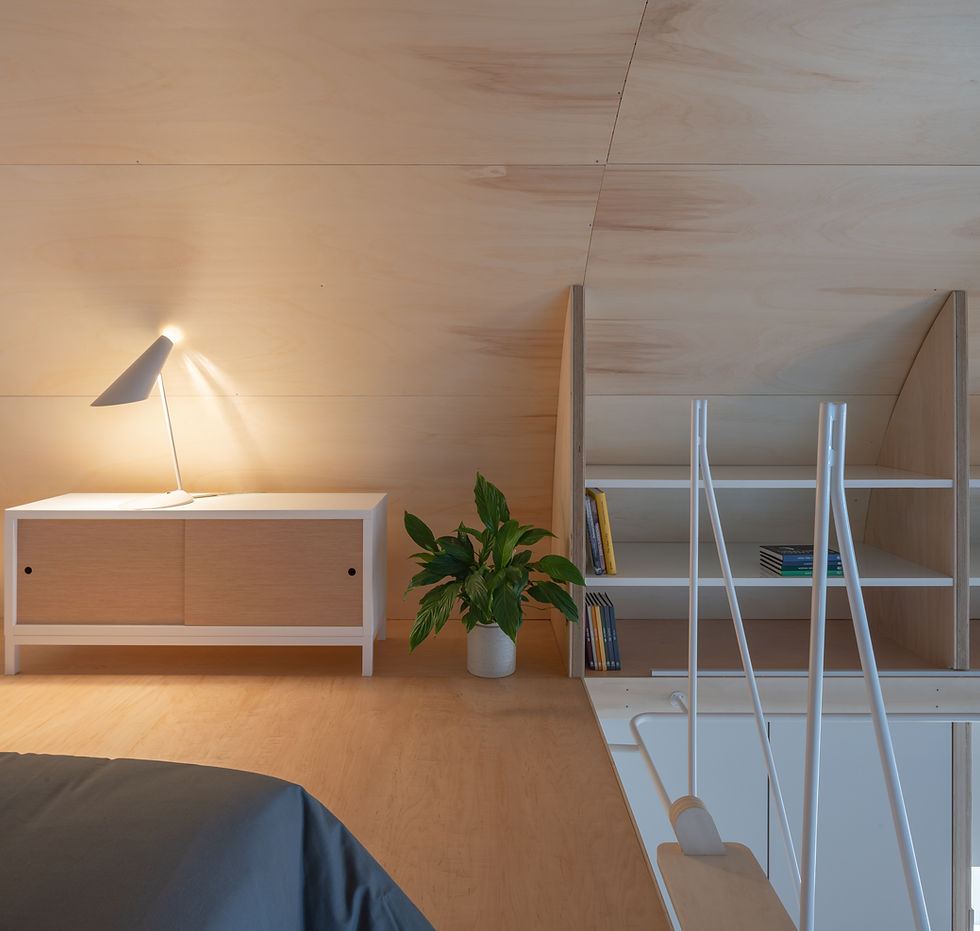
Lightweight plywood has become an important tool for architects seeking greater flexibility, improved efficiency, and more sustainable ways to build.
As architecture continues to evolve, material weight is becoming more than a technical specification. It’s emerging as a design strategy that influences how buildings are conceived, constructed, and adapted for decades to come.


