
Why People Counting Is Becoming a Quiet Standard in Physical Retail Operations
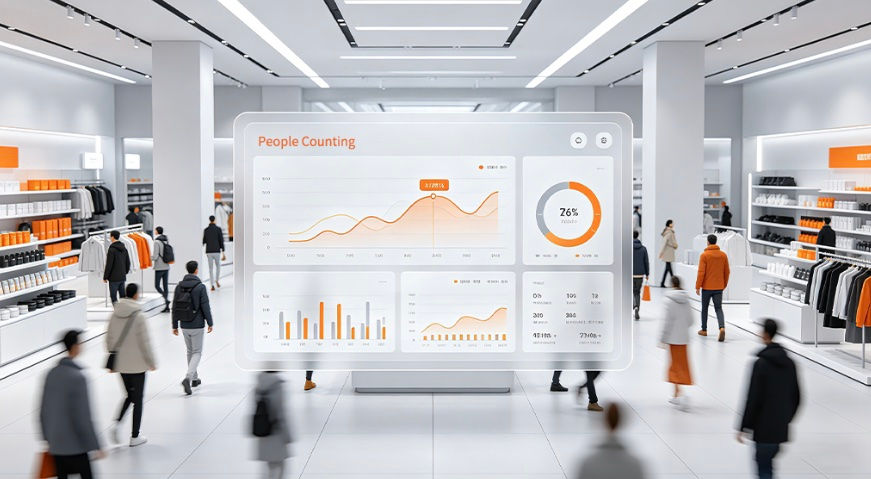
A few years ago, foot traffic was something people “estimated”.
You’d hear things like:
“It felt busy today”
“Weekends are usually stronger”
“We had a good crowd, I think”
That kind of language still exists, but less and less in teams that have access to people counting systems.
Offline businesses finally getting “basic visibility”
Online businesses have always had an advantage—everything is trackable.
Clicks, sessions, bounce rates… all measurable.
Offline stores didn’t really have that layer. At least not consistently.
People counting changes that, not by overcomplicating things, but by adding one missing variable: actual foot traffic.
The shift is subtle, not dramatic
What usually happens is not a big transformation.
It starts small:
A manager notices traffic is lower than expected
A store compares performance across locations
Someone questions staffing efficiency
Then people counting data becomes part of regular reporting.
And slowly, decisions start leaning on it more.
Where it actually helps (in real terms)
1. Understanding performance properly
A store with declining sales isn’t always “underperforming”.
Sometimes traffic is just down.
That distinction matters a lot more than it seems, because the solutions are completely different.
One requires marketing or visibility improvements.The other might be operational or internal.
Without people counting, that line is blurry.
2. Finding timing mismatches
This is something most teams underestimate.
They assume peak hours based on experience.
But real traffic often tells a different story.
Sometimes:
Morning hours are stronger than expected
Late afternoons drop faster than assumed
Weekday patterns don’t match internal assumptions
It doesn’t always change strategy, but it often adjusts priorities.
3. Comparing locations fairly
Multi-location businesses struggle with this.
Sales alone can be misleading because:
Some areas naturally get more traffic
Some locations depend on visibility
Some rely heavily on conversion efficiency
People counting helps normalize that comparison a bit.
It doesn’t solve everything, but it makes discussions more grounded.
Not perfect data, but useful enough
It’s worth saying: people counting isn’t perfect intelligence.
Sensors miss things sometimes. Environments vary. Data needs interpretation.
But even with those limitations, it’s still better than guessing.
And in most retail environments, that’s already a big step forward.
Final thought
A lot of “smart retail” discussions focus on advanced tools.
But sometimes the most impactful change is basic visibility.
People counting is not about sophistication—it’s about finally seeing what’s actually happening inside the store.
Once that becomes normal, a lot of decisions naturally improve without needing big strategy shifts.


