
From First Note to Full Performance: Building a Serious Music Practice from the Ground Up

Every musician you have ever admired started in the same place you did, with a voice or an instrument, a room, and more questions than answers.
The distance between that starting point and a confident, polished performance is not talent alone but a series of deliberate choices about how to train, where to practice, and when to push beyond the comfort of a bedroom or living room.
Why Most Musicians Stay Stuck at the Same Level
The Comfort Zone Trap
Many people who love music spend years practising privately without ever progressing beyond a certain ceiling.
They improve in small ways, but the fundamental gaps in technique, timing, and stage presence never fully close because the environment they are practising in does not challenge those gaps.
Progress in music is not linear, and it does not happen on a fixed schedule. It accelerates when the right structure is introduced, and it stagnates when that structure is missing.
What Structured Learning Actually Changes
Structured learning, whether through private instruction or a group course, introduces accountability and external feedback that self-directed practice cannot replicate.
A teacher hears what you cannot hear in yourself, identifies patterns in your mistakes, and builds a curriculum that moves you forward in the right sequence.
This is especially true for singers, where the instrument is inside the body, and problems with breath support, resonance, or pitch are genuinely difficult to diagnose without a trained ear listening from the outside.
The guidance of a skilled vocal coach compresses years of trial and error into months of purposeful work.
The Role of Formal Vocal Training
Building Technique Before Style
Many aspiring singers focus on style before they have the technical foundation to support it, which leads to a ceiling that feels frustrating because it is invisible.
Technique covers breath management, pitch accuracy, tonal consistency, and vocal health, and without it, even the most naturally gifted voice will plateau and eventually strain under regular performance demands.
Formal pop vocal training addresses these foundations systematically rather than leaving them to chance.
Students who invest in this kind of structured instruction find that their stylistic choices, the things they actually love about singing, become more expressive and sustainable once the mechanics are solid.
The Specific Demands of Pop Singing
Pop singing sits at a unique intersection of technical discipline and emotional authenticity, which makes it one of the more demanding vocal styles to teach well.
It draws from multiple genres simultaneously, requires microphone technique, demands consistent performance across takes or sets, and rewards singers who can communicate directly to a listener rather than projecting to a concert hall.
Courses designed around pop vocal development cover this range of skills in an environment built for the genre.
For singers working toward music performance Hong Kong, a structured course that addresses contemporary vocal style alongside core technique gives students both the skills and the cultural context to perform in a competitive, internationally influenced music scene.
Why the Teacher-Student Relationship Matters
The relationship between a student and their vocal instructor is one of the most important variables in how quickly someone improves.
A good teacher reads not just the technical problems but the student's learning style, confidence level, and long-term goals, and adjusts the approach accordingly.
Group classes offer community and shared energy, but private instruction offers something different: a focused, tailored session where every minute is spent on exactly what that student needs.
The combination of both, where a student takes structured courses and supplements with one-on-one sessions, produces the fastest and most durable growth.
Moving from Private Practice to Real Spaces

Why the Practice Room Is Not Enough
There is a moment every developing musician recognises, where they sound good at home, they have put in the hours, and they feel ready, but the first time they play or sing in a real space in front of other people, something shifts.
The acoustics are different, the energy is different, and the version of themselves that shows up is not the version that practised alone in a quiet room.
This is not a failure of preparation. It is the predictable result of practising in a context that does not match the context of performance. The solution is to train in spaces that progressively close that gap.
The Value of Rehearsal Spaces
Professional rehearsal studios exist precisely because musicians need an environment between the bedroom and the stage.
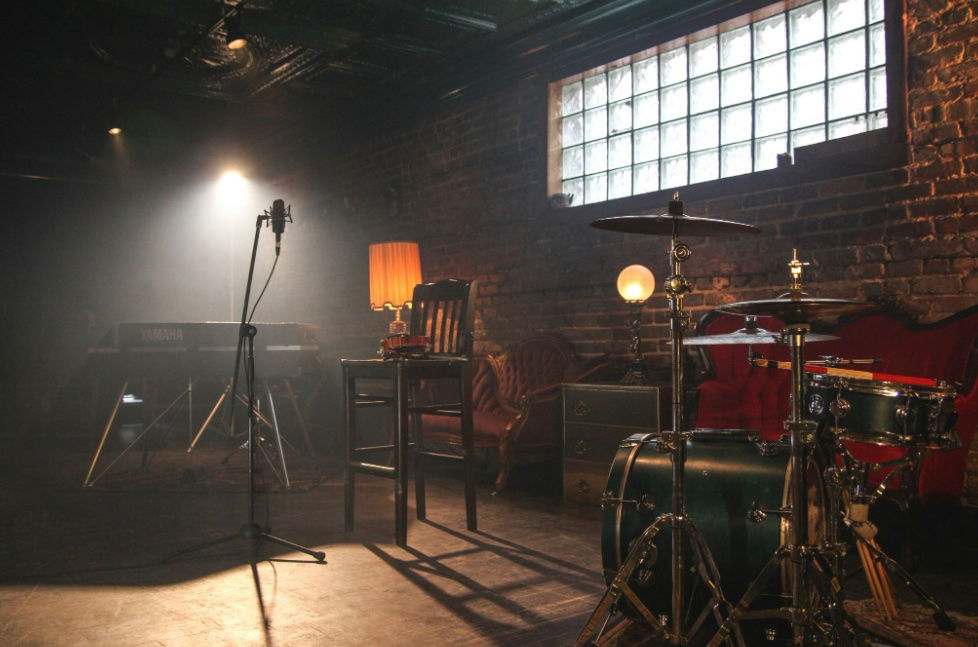
They offer full-sized rooms with proper acoustics, quality sound systems, and the physical space to move, project, and perform rather than simply play.
Rehearsing in a proper studio changes how musicians relate to their own sound. Hearing your voice or your instrument in a treated room through a real PA system reveals things that a phone speaker or a laptop playback cannot, and those revelations are exactly the kind of feedback that drives rapid improvement.
Finding the Right Rehearsal Environment
The right rehearsal space depends on what you are trying to accomplish. A solo vocalist preparing for an audition needs a different environment than a four-piece band working through a set list, and a musician learning to perform to a room needs something different again from someone doing early song development work.
For musicians at any stage of development, access to well-equipped, professionally maintained rehearsal spaces is one of the most practical investments they can make in their progress.
Options for rehearsal venue rental that include private lesson availability alongside studio access give musicians a genuinely flexible resource, covering both the instructional side of development and the physical space needed to put that instruction into practice.
Building a Practice Routine That Produces Results
Structure Over Volume
Hours alone do not produce improvement. Hours of structured, intentional practice focused on specific weaknesses do.
A musician who practises for thirty minutes with a clear objective will outpace one who plays for two hours without direction, and this principle applies equally to vocalists, instrumentalists, and performers of every genre.
Building a routine means identifying the skills that need the most work, creating targeted exercises for those skills, and tracking progress over time.
A teacher or coach helps with all three, which is why instruction and practice are not separate activities but a single, integrated process.
Performing Regularly as Part of the Practice
The only way to become comfortable performing is to perform regularly, and waiting until you feel fully ready is a reliable way to never start.
Low-stakes performances, whether for a small group of friends, at an open mic, or in a rehearsal studio setting, build the specific kind of confidence that private practice cannot create.
Each performance, regardless of how it goes, generates data that no amount of private practice can produce.
How you handle nerves, how your voice or instrument responds to a room, how an audience receives your work: all of these are lessons that only the act of performing can teach.
Conclusion
The path from enthusiastic beginner to confident performer is not a mystery. It is a sequence: build technical foundations through structured instruction, develop stylistic range through focused practice, move into real spaces to close the gap between private and public performance, and perform regularly to consolidate everything the practice room taught you.
None of these steps requires a shortcut or a natural gift that most people lack. They require a willingness to invest in the right resources, seek out good instruction, and treat the development of a music practice as seriously as any other skill worth building.
The musicians who do this consistently are the ones who look, from the outside, like they were simply born to perform.


