
How to Choose the Right Sim Rig for Your Space, Budget, and Goals
- Apr 25
- 7 min read
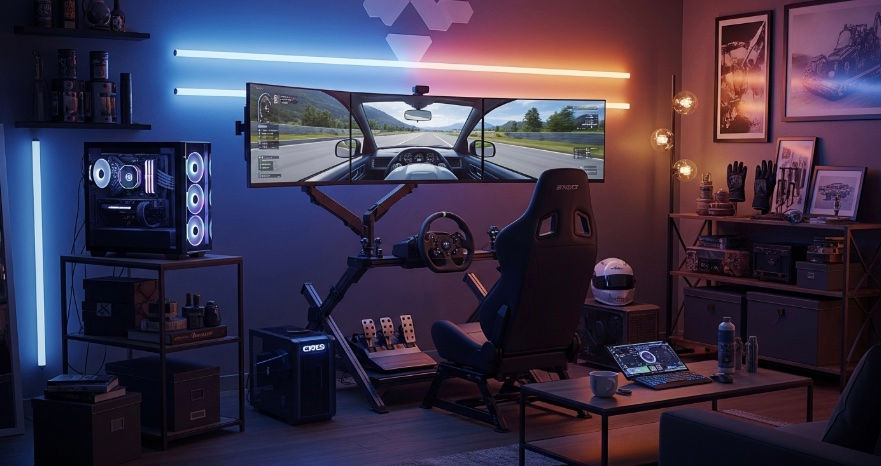
Key Highlights
Assess your available space to determine if you need a compact, foldable sim rig or have room for a larger setup.
Set a realistic budget, considering entry-level, mid-range, and high-end options for a complete setup.
Match your sim rig to your racing goals, whether you're a casual gamer or a serious sim racing competitor.
Understand the differences between materials like aluminum and steel to balance cost, durability, and performance.
Prioritize essential accessories, including a quality racing seat, steering wheel, and pedal set for an immersive experience.
Choose the best value options that allow for future upgrades, ensuring your sim rig grows with your skills.
Introduction
Ready to elevate your sim racing experience? Choosing the right sim rig is essential—it’s the foundation for stability and immersion. Whether you’re a beginner or a pro, the perfect rig depends on your space, budget, and goals. This guide covers everything you need to make the best choice.

Understanding the Basics of a Sim Rig
A sim rig, or sim racing rig, is the frame that holds your racing simulator components—seat, steering wheel, and pedals—together. It replicates a real car’s driving position and provides stability for intense sessions, ensuring your gear stays secure so you can focus on driving.
The main purpose of a sim rig is to deliver an immersive, realistic experience. Unlike a desk setup, it positions you correctly and makes you feel connected to the virtual car. From simple frames to advanced cockpits, the right rig turns your gaming space into a serious training tool or an exciting escape into sim racing.
Assessing Your Space for a Sim Rig
Before you get caught up in the excitement of high-end gear, take a moment to look at your room. The amount of floor space you have is a critical factor in choosing a sim rig. Do you have a dedicated room for your hobby, or will your racing cockpit need to fit into a multi-purpose area like a living room or office?
Measuring your available area will help you narrow down your options significantly. A permanent, rigid cockpit requires a dedicated footprint, while other solutions are designed for a small space. Being realistic about your spatial limitations from the start will save you from a lot of frustration later. Now, let’s explore some options tailored for different environments.
Compact Sim Rig Solutions for Small Spaces
How do I choose a sim rig for a small room?
If you live in a studio or have limited space, choose a compact sim racing rig. Foldable options like wheel stands or the Playseat Challenge, offer stability during use and can be easily stored away when not needed. These rigs are lightweight, quick to set up, and pack away in minutes—so you don’t have to give up sim racing due to space constraints.
Key features to look for:
Foldable Design: Collapses into a small footprint.
Lightweight Materials: Easy to move and store.
Tool-Free Adjustments: Fast setup and breakdown.
Integrated Seat: Models like the Playseat Challenge include an all-in-one seat.
Setting Your Sim Rig Budget Wisely
Setting a budget is essential for your sim racing journey. Costs range from a few hundred dollars for entry-level setups to thousands for professional rigs. Decide how much you’re willing to spend on the entire setup—rig, wheel, pedals, and screen. For beginners on a tight budget, look for sturdy, affordable frames that offer the best value.
Think of your sim racing setup as an investment. Start with a basic configuration and upgrade over time if needed. Prioritize a solid frame first, as it’s the foundation of your racing experience.
Matching Sim Rig Styles to Personal Goals
Your personal goals should guide your choice of racing rig. Casual players may prefer comfortable, easy-to-use setups for weekend fun, while aspiring competitors need rigs that offer greater realism and adjustability. Serious racers benefit from rigs that closely mimic real driving positions to build muscle memory and consistency.
Ultimately, the best sim racing experience aligns with your ambitions—whether for fun, training, or competition. Next, we'll explore how different rigs suit various racing disciplines.
Sim Rig Configurations for Different Racing Disciplines
Different sim rig styles match different racing disciplines, each requiring a unique driving position. Formula sim racing uses a low, reclined seat like a Grand Prix car, while GT and rally setups have a more upright posture. High adjustability is essential—choose a rig that lets you easily change seat, wheel, and pedal positions, especially if you race in multiple categories.
A rigid frame is important for direct drive wheelbases to prevent flex and ensure precise control.
Here’s how rig styles pair with popular racing types:
Racing Discipline | Driving Position | Key Rig Features |
Formula/Open-Wheel | Reclined, low-to-ground | Raised pedals, fixed-back seat |
GT Racing | Upright, angled | Sturdy frame, adjustable wheel deck |
Rally/Drifting | Fully upright | Room for handbrake/shifter, robust build |
Choose the style that fits your preferred racing discipline and look for maximum adjustability to future-proof your setup.
Comparing Materials: Aluminum vs Steel Sim Rigs
The material of your sim racing rig greatly impacts its performance, price, and durability. Steel rigs are affordable, strong, and provide good rigidity, making them ideal for beginners and intermediate users. Aluminum rigs cost more but offer superior strength, zero flex with direct drive wheelbases, and easy customization. Their durability and modularity make aluminum rigs the top choice for serious racers seeking long-term value and high performance.
Essential Accessories for a Beginner Sim Rig
Once your frame is ready, add the key components: steering wheel, pedals, and seat. For beginners, a force feedback wheel is essential for a realistic road feel. Responsive pedals are crucial for precise acceleration and braking. While you can expand with shifters and button boxes later, starting with a quality wheel base and pedal set provides a solid foundation. Next, let’s look at these must-have add-ons and their compatibility.
Must-Have Add-ons (Wheel, Pedals, Seats)
Essential accessories for a basic sim racing setup include:
Steering Wheel: Opt for one with strong force feedback. Direct drive is best, but belt- or gear-driven wheels are solid budget options.
Pedal Set: Load cell pedals greatly improve braking accuracy and consistency.
Racing Seat: Choose a comfortable, adjustable seat for long sessions and a proper driving position.
Monitor Stand or VR Headset: For immersive visuals.
These core components enhance realism, comfort, and performance in sim racing.
Accessory Compatibility and Future-Proofing
You can upgrade your sim rig over time; there’s no need to buy everything at once. One of sim racing’s key advantages is the ability to improve your setup piece by piece. Start with a sturdy, modular frame that supports future accessories—this makes upgrades easier as your skills and budget grow.
When picking components, consider brands like Moza Racing or Fanatec, which offer compatible ecosystems. This lets you swap in better wheels or pedals later without hassle. Good cable management and modular design also make upgrades smoother.
Investing in a versatile frame upfront ensures it can handle more advanced gear down the line. This way, you can gradually build your ideal rig without starting over as your needs evolve.
Choosing the Right Brands and Models for Your Needs
With so many options, choosing the right brand and model can be overwhelming. Trusted sim racing brands offer quality products for various needs and budgets. For example, some models are known for their compact design, while others deliver top-tier performance.
Researching brands and reading reviews helps you find reliable products. Whether you select a pre-configured bundle or build a custom setup, choosing reputable brands like SimRigs ensures durable, high-performance gear. Below are specific model recommendations for different use cases.
Recommended Sim Rigs for Limited Spaces
Absolutely. For limited spaces, compact sim rigs are ideal. The Playseat Challenge is a top choice—stable, comfortable, and folds easily for storage.
The Next Level Racing GTLite and F-GT Lite are also excellent; both fold up and offer adjustable driving positions. If you already have a chair, consider a quality wheel stand for minimal space use.
Top picks for small spaces:
Playseat Challenge: Ultra-compact and quick to set up.
Next Level Racing GTLite/F-GT Lite: Foldable with adjustable positions.
Wheel Stands: Minimal footprint, works with your own chair.
Compact Cockpits: Non-foldable options designed to save space.
Best Value Picks for Beginners
Which sim rigs offer the best value for beginners on a tight budget? Getting started in sim racing doesn’t have to be expensive. Several rigs provide a stable platform at an affordable price, striking a balance between cost, quality, and upgradeability. An entry-level cockpit is a major improvement over a desk setup. Models like SimRigs offer excellent rigidity for their price and can handle entry-level direct drive wheels. The ideal beginner rig should be sturdy enough for consistent use and allow future upgrades, such as better wheelbases or pedals.
Conclusion
In conclusion, choosing the right sim rig requires considering your space, budget, and racing goals. By evaluating your area, materials, and accessories, you can make an informed choice that improves your experience. Investing in a quality rig sets you up for future upgrades and lasting enjoyment. Ready to elevate your sim racing? Contact us for a free consultation to find the perfect fit for you.
Frequently Asked Questions
Can I upgrade my sim rig over time, or should I buy everything at once?
You can absolutely upgrade your sim rig over time. Investing in a sturdy, modular frame is a great strategy for future-proofing. This allows you to improve your sim racing setup piece by piece, enhancing sim racing performance as your budget and skills grow, thanks to widespread accessory compatibility.
What are the most important features to consider when picking my first sim racing rig?
When picking your first sim racing rig, prioritize stability, adjustability, and comfort. Ensure the frame can handle your chosen wheel, especially if it has force feedback wheels or is a direct drive model. A solid pedal set, platform, and a comfortable seat are also crucial for an immersive experience.
Are there budget-friendly sim rigs suitable for apartment living?
Yes, there are excellent budget sim rigs perfect for a studio apartment. Compact sim racing models like the Playseat Challenge or foldable wheel stands offer easy storage without sacrificing performance. These are some of the best sim racing cockpits for those with limited space, providing a great experience on a budget.


