
Vienna: Europe’s Quiet Luxury Capital for the Global Buyer
- May 20
- 6 min read
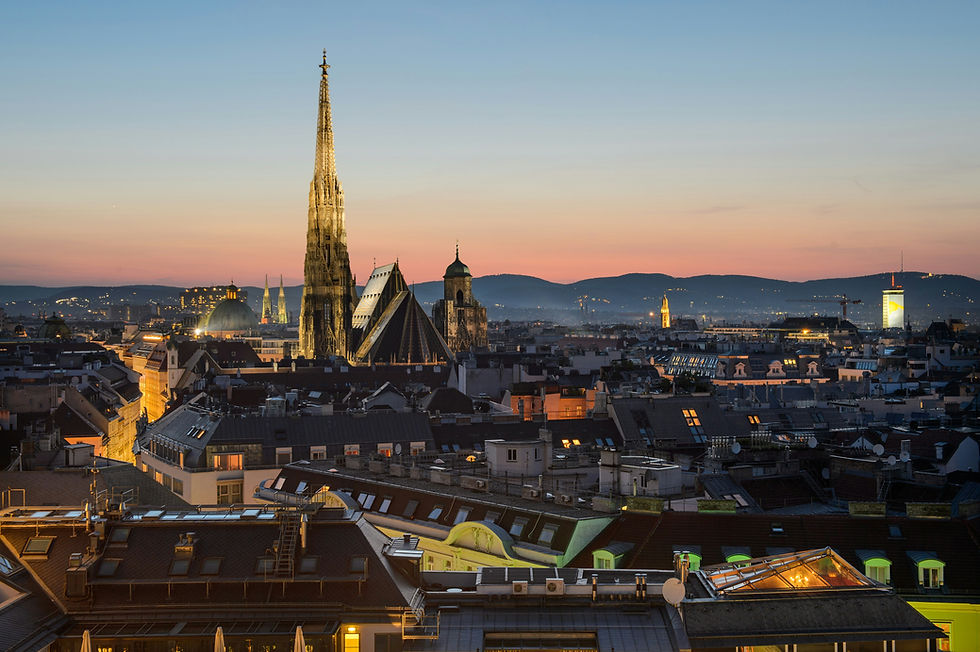
In Europe, luxury is often associated with visibility: the grand boulevards of Paris, the financial prestige of London, the design language of Milan, or the Mediterranean glamour of the Côte d’Azur. Vienna belongs to another category. It does not compete through volume, spectacle, or excess. Its appeal is quieter, more cultivated, and increasingly attractive to international buyers who are looking for something more enduring than a seasonal address.
Vienna offers a rare combination: imperial architecture, cultural depth, political stability, excellent public transport, green space, walkable neighborhoods, and a lifestyle that feels both refined and practical. For global buyers, this makes the city more than a beautiful European capital. It becomes a long-term home base — elegant, secure, and deeply livable.
This is why Vienna is increasingly being viewed through the lens of “quiet luxury”: not luxury designed to be displayed, but luxury designed to be lived in.
Why Vienna Speaks to the Global Buyer
Vienna’s greatest strength is that its beauty is not separated from everyday life. The same city that offers opera houses, museums, historic cafés, and grand architecture also offers reliable transport, clean streets, safe residential districts, strong healthcare access, and an exceptional rhythm for daily living.
For international buyers, this matters. A European home is rarely only about square meters. It is about how the city functions around that home. Can one walk to dinner? Is the neighborhood safe in the evening? Are parks nearby? Does the city feel manageable? Can it serve as a second residence, a family base, or a long-term lifestyle decision?
Vienna answers these questions with unusual confidence. Its elegance is not limited to postcard views; it is embedded in the way the city is organized.
What Vienna Offers | Why It Matters to Global Buyers |
Historic architecture | Strong sense of place and long-term cultural value |
High quality of life | Comfortable daily living, not only occasional travel appeal |
Green urban planning | Access to parks, nature, and a calmer city rhythm |
International institutions | Diplomatic, business, and global relevance |
Efficient transport | Easy movement without dependence on a car |
The New Definition of Prime Location
Across Europe, the meaning of a prime address is changing. For many buyers, prestige is no longer defined only by being in the most famous district or owning the most visible residence. A prime location now also means access to culture, privacy, green space, mobility, schools, restaurants, and a neighborhood that feels authentic rather than overexposed.
Vienna fits this shift naturally. Its central districts offer grandeur and history, while its residential neighborhoods provide calm, structure, and a more discreet form of refinement. The result is a city where luxury can be central, green, historic, modern, or deeply private — depending on the buyer’s lifestyle.
This variety is one reason searches related to vienna real estate have become more nuanced. Buyers are not simply asking what is available. They are asking which part of the city matches the way they want to live.
Vienna’s Neighborhoods: Different Forms of Quiet Luxury
The Innere Stadt, Vienna’s first district, is the symbolic heart of the city. It is where cultural proximity becomes a form of luxury: opera, museums, historic cafés, luxury retail, elegant squares, and architectural landmarks are part of the daily landscape. A residence near Parkring offers immediate access to Stadtpark and the historic core, while an address around Schwarzenbergplatz places the Belvedere and diplomatic Vienna within easy reach. For buyers who want to feel the pulse of old Europe, this district has a particular emotional and cultural weight.
Other districts offer a more residential interpretation of Viennese elegance. Josefstadt and Wieden attract those who enjoy walkable streets, intellectual character, restaurants, galleries, and a more intimate city atmosphere. Landstraße offers a practical balance between central access and residential comfort. Leopoldstadt, with its connection to green space and the Danube, appeals to buyers who want a more dynamic, open urban lifestyle.
Döbling, by contrast, represents a softer and more private version of Vienna. The 19th district, especially toward the Cobenzl vineyards, offers villas, leafy streets, hillside views, and proximity to the Vienna Woods. It appeals to buyers who value space, discretion, and a slower rhythm while still remaining connected to the capital.
District | Atmosphere | Best Suited For |
Innere Stadt | Historic, prestigious, cultural | Buyers seeking a refined central address |
Josefstadt / Wieden | Elegant, walkable, intellectual | Professionals, couples, cultural city lovers |
Landstraße | Central, practical, well-connected | Families and long-term residents |
Leopoldstadt | Green, open, evolving | Modern buyers seeking lifestyle balance |
Döbling | Private, green, residential | Buyers prioritizing calm and space |
Vienna Apartments and the Appeal of Architectural Character
One of Vienna’s strongest real estate advantages is architectural continuity. Many international cities have luxury housing, but fewer have residential buildings that carry such a clear sense of history. High ceilings, parquet floors, large windows, historic façades, inner courtyards, and elegant staircases are not decorative details; they shape how a home feels.
This is why searches for Vienna apartments often begin as practical research and quickly become more emotional. Buyers discover that apartments in Vienna are not only about size or price, but also about atmosphere. An Altbau apartment may offer character and ceiling height, while a new-build residence may provide energy efficiency, underground parking, smart layouts, and modern comfort.
The best choice depends on the buyer’s lifestyle. Someone who wants cultural immersion may prefer a historic apartment close to the center. A family may prioritize schools, parks, elevators, storage, and efficient room distribution. A frequent traveler may value a compact, elegant pied-à-terre that can serve as a European base.
Apartment Type | Main Appeal | Key Consideration |
Historic Altbau | Character, ceiling height, classic Vienna atmosphere | Energy performance and building maintenance |
Modern new-build | Efficiency, comfort, contemporary planning | Location and long-term neighborhood value |
Central pied-à-terre | Easy European base and cultural access | Size, layout, and practical storage |
Family apartment | Space, schools, parks, daily convenience | Room distribution and transport links |
The Financial Side: A Calm, Long-Term Perspective
Vienna is not usually chosen by buyers seeking dramatic short-term speculation. Its appeal is more measured. The city attracts those who value capital preservation, lifestyle quality, and a market supported by long-term urban desirability.
For buyers comparing European capitals, this distinction is important. Vienna may not have the same level of international noise as London or Paris, but that is part of its strength. It offers a more discreet market environment, one where lifestyle and asset logic often work together.
As in any European property market, buyers should look beyond the purchase price. Taxes, registration costs, legal fees, building condition, ownership structure, renovation needs, and long-term maintenance costs all matter. A beautiful apartment can be an excellent decision only when the technical, legal, and financial details are equally clear.
For many international buyers, researching Vienna apartments is less about browsing available homes and more about understanding the city’s many layers: historic façades, modern residences, quiet green districts, cultural streets, ownership costs, and the rhythm of daily life. In Vienna, the right property is rarely just an address. It is a relationship with a building, a neighborhood, and a particular version of European living.
Why Vienna Feels Timeless
What makes Vienna special is not only what it has preserved, but how naturally that heritage continues to function. Its palaces and concert halls are not isolated monuments. Its cafés are not only tourist attractions. Its parks are not decorative. They are part of the city’s living system.
This gives Vienna a timeless quality. A buyer may arrive for the architecture, but stay for the rhythm. Morning coffee in a historic café, an evening concert, a walk through a quiet residential street, a weekend near the vineyards, or a short tram ride across the city — these are not dramatic luxuries. They are daily ones.
That is the essence of Vienna’s quiet luxury. It is not designed to impress at first glance. It reveals itself gradually, through consistency, beauty, order, and a sense of belonging.
Conclusion: Vienna as Europe’s Refined Home Base
For the global buyer, Vienna offers something increasingly rare in Europe: elegance without excess, culture without chaos, and stability without stagnation. It is a capital city with international relevance, but also a place where life can feel calm, structured, and deeply personal.
Its real estate market reflects the same character. The most compelling homes in Vienna are not only assets; they are extensions of a lifestyle shaped by architecture, culture, and long-term value. Whether one is drawn to a historic apartment in the center, a discreet residence in a green district, or a modern home base connected to the rest of Europe, Vienna offers a refined alternative to louder luxury destinations.
In a world where luxury is often defined by visibility, Vienna remains powerful because it does not need to shout. It is cultured, stable, elegant, and quietly confident — perhaps exactly what the next generation of global buyers is looking for.


