
Wedding Flowers Are Quietly Becoming One of the Biggest Line Items — Here's How Couples Are Pushing Back
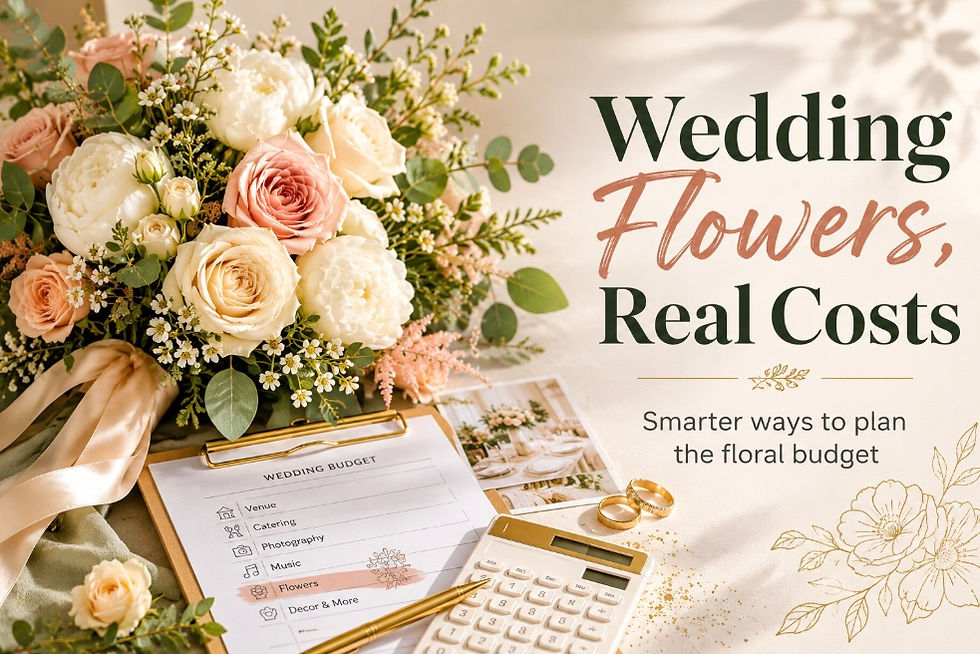
Most couples sit down to plan a wedding expecting the venue, the catering, and the photographer to take the biggest bites out of the budget. Flowers rarely make that mental list. Then the first florist quote arrives, and the number lands somewhere between surprising and alarming.
It turns out flowers are not a rounding error. According to The Knot's most recent Real Weddings Study, the average couple now spends around $2,800 on wedding flowers. That is more than many people set aside for the dress, and it sits close to what they pay for a DJ. On a typical wedding costing around $34,000, florals usually account for roughly eight to ten percent of the total. For a line item most couples barely think about until the planning starts, that is a meaningful share of the day.
Where the Flower Budget Actually Goes
Part of the sticker shock comes from not understanding what you are paying for. A bridal bouquet is not just the blooms inside it. The price reflects the cost of the flowers themselves, the labor to design and assemble each piece, delivery, and the simple fact that fresh flowers are perishable and have to be sourced close to the date.
Seasonality makes it worse. Want peonies in October or specific shades that are out of season? Expect a premium, because those blooms have to be imported or grown under conditions that cost more. Weather, shipping disruptions, and even broader agricultural swings can all nudge prices up between the time you book and the day you walk down the aisle.
And then there is the part that stings most in hindsight: nearly all of those flowers get used once. Ceremony arrangements get glanced at for twenty minutes. Centerpieces last the reception. By the next morning, hundreds or thousands of dollars in flowers are wilting in the trunk of someone's car.
The Shift Toward Faux Blooms
This is where a growing number of couples are rethinking the default. Rather than treating fresh flowers as the only option, many are mixing in — or fully switching to — faux alternatives that have come a long way from the stiff, shiny fakes of a decade ago.
Modern silk wedding flowers are made with realistic textures, soft color gradients, and detailed petal shapes that are designed to look natural in photos rather than obviously artificial. The appeal is partly aesthetic and partly practical. They do not wilt in summer heat, they survive a long shipping window, and they do not need to be ordered at the last minute and assembled the morning of the wedding. For destination and outdoor ceremonies, where fresh flowers struggle, that durability is a real advantage.

The cost argument is the one that gets the most attention. Faux retailers commonly point out that couples can save a large share of their floral budget by going artificial, with some suppliers citing reductions of fifty to seventy percent on the total. Those figures come from the sellers themselves, so they are worth treating as a starting point rather than a promise. But even a conservative version of that math changes the conversation when the baseline is a $2,800 spend on something that lasts a single day.
What to Check Before Choosing an Artificial Bouquet
Going faux is not automatically a win. The quality range is enormous, and a cheap arrangement can look exactly as cheap as you fear. A few things separate a bouquet that photographs beautifully from one that gives the game away.
Texture matters most. Run your eye over the petals in close-up photos before buying — good artificial bridal bouquets use materials with a soft, slightly matte finish rather than a plastic sheen. Color is the next tell; natural flowers have subtle gradients and imperfections, so arrangements with flat, uniform color tend to read as fake.
Size and proportion are easy to get wrong online. Bouquets often look larger on screen than they do in person, so check the listed dimensions against what you actually want to carry. It also helps to order a single piece first, such as one bridesmaid bouquet, to judge the color and quality in person before committing to a full set. If it is not right, a standard unused item can usually be returned.
Finally, think about matching. If you have a specific palette, look for sellers that either organize collections by color or offer custom matching from inspiration photos, so the bouquets, boutonnieres, and centerpieces actually coordinate rather than clash.
A More Intentional Way to Spend
None of this means fresh flowers are a mistake. For couples who love the scent, the seasonality, and the ritual of fresh blooms, the cost can absolutely be worth it. The point is that the default is no longer the only choice.
Suppliers such as Rinlong Flower organize their range by category and color, which makes it easier to compare options against a specific palette or budget before deciding. Whether a couple goes fresh, faux, or a blend of both, the smarter move is the same: decide early how much the day's flowers are truly worth to you, and spend with that number in mind rather than discovering it after the quote arrives.
Flowers will always be part of what makes a wedding feel like a wedding. They just no longer have to be the line item that quietly blows up the budget.


