
Why scuba diving with whale sharks stays with you long after the dive
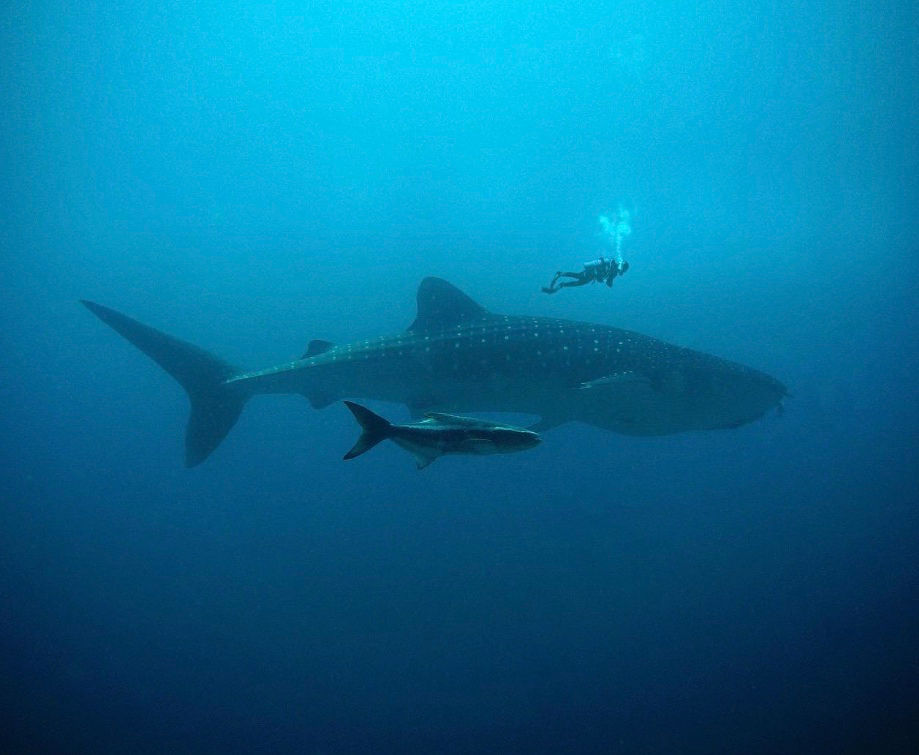
Whale sharks have a way of quieting people down.
Not immediately, perhaps. There’s often a rush at first — anticipation, nerves, the mental checklist that comes with knowing you’re about to share water with something enormous. But once you’re there, really there, that energy drains away. What replaces it is something slower. Focused. Almost meditative.
For many underwater explorers, that shift is what makes encounters with whale sharks feel fundamentally different from almost anything else they experience underwater.
Size, without threat
It’s difficult to explain scale underwater without exaggeration. Everything looks bigger down there. Perspective plays tricks. But whale sharks don’t rely on illusion.
They’re vast in a way that doesn’t feel aggressive. There’s no sense of pursuit, no sharp movement. Just steady motion. Purposeful, but unhurried. You notice how little effort they seem to expend, how calmly they move through space that suddenly feels much smaller than you remember.
This contrast — size paired with gentleness — is what tends to reset expectations. Fear never quite arrives. Awe does, but in a quieter form.
Encounters that can’t be rushed
One of the reasons scuba diving with whale sharks resonates so deeply is that it resists control.
You can’t choreograph these encounters. You can’t guarantee timing, positioning, or duration. Sometimes the moment lasts seconds. Sometimes it stretches longer than expected. Sometimes it doesn’t happen at all.
That uncertainty matters. It keeps the experience honest.
For experienced divers especially, this lack of predictability can feel refreshing. There’s no checklist to complete, no “perfect” shot to chase. You’re simply present, aware that you’re a visitor — temporary, peripheral.
A lesson in awareness, not adrenaline
Despite how they’re often portrayed, whale shark encounters aren’t adrenaline-heavy experiences. They don’t spike your pulse in the way fast-moving predators can. Instead, they sharpen attention.
You become aware of your buoyancy. Your breathing. The distance you’re keeping. Every small adjustment feels more deliberate. Respect isn’t abstract here; it’s physical.
That awareness often carries beyond the dive itself. Many divers mention surfacing feeling calmer than when they descended. As if something in their internal pacing has shifted, just slightly.
The role of responsibility
Whale sharks are particularly vulnerable to how humans behave around them. Their size doesn’t protect them from stress, poor regulation, or overcrowding. If anything, it makes the consequences more visible.
This is where experience and ethics intersect. Responsible operators, limited numbers, clear guidelines — these aren’t optional extras. They shape whether the encounter feels meaningful or uncomfortable.
For underwater explorers who care about longevity — of reefs, species, and experiences — this context becomes part of the story. The encounter isn’t just about proximity. It’s about how that proximity is handled.
Why people talk about these dives differently
Listen to how people describe diving with whale sharks and you’ll notice something interesting. The language softens.
There’s less emphasis on achievement, more on memory. Less on what was “seen,” more on how it felt to be there. The stories often trail off rather than climax. Details emerge slowly. A fin passing overhead. A shadow shifting light. A moment of shared direction.
That’s usually a sign that something landed emotionally, not just visually.
Long after the water clears
Whale shark encounters don’t always announce their impact right away.
Sometimes it shows up later — when another dive feels louder by comparison, or when you find yourself thinking more carefully about space, distance, and restraint underwater. The memory doesn’t fade quickly, but it also doesn’t demand attention. It sits quietly, available when recalled.
Perhaps that’s the real reason these experiences endure. Not because they overwhelm, but because they recalibrate.
They remind you that underwater exploration isn’t always about discovery in the outward sense. Sometimes it’s about perspective. About learning how to be small without feeling insignificant.
About the author
Kyle is a long-form travel writer and underwater enthusiast who focuses on slow travel, ethical exploration, and experiences that linger beyond the moment. Through his work, he explores how places shape perspective rather than just itineraries. You can find more reflective travel stories and in-depth destination insights on his travel blog.


